Your dog's happiness is not something you should take for granted. Dogs are aware, sentient beings that need a number of things in order to be content and to enjoy life. Dog owners need to get out of the mindset that dogs are mere possessions and begin to establish caring and responsible relationships with these fine animals. For all the loyalty and love dogs give to humans they deserve consideration in return. Bearing this in mind, here are some tips you can use to keep your dog healthy, motivated, and happy.
Pat and be affectionate with your dog.
This seems simple enough, but in the general bustle of a busy schedule it can be forgotten. Take at least a few minutes each day to just pat your dog and show your love. If you don't understand how this leads to a happier dog, then perhaps dogs aren't for you.
Let your dog have a chance to run outdoors.
This is neglected even more often than the previous tip. Dogs are naturally active, athletic animals. Both to for simple physical exercise and to maintain their sense of psychological zest dogs need to run and jump. So take you dog to dog parks, on hiking trails, or out to a safe yard (fenced or far from roads) and let it actually run or at least vigorously walk.
Clean fresh water.
Many people leave water in bowls for days on end. It accumulates dust and dirt, becomes stagnant, and if outdoors even provides a breeding ground for insects. Change your dog's water daily, and make sure to use clean, fresh water. Also make sure the bowl doesn't run dry for long periods. Just as it is for humans, drinking enough water is one of the keys to efficient and balanced physical functioning. Insuring your dog has good, fresh water is an important step toward insuring good health.
Give your dog high quality food, and food it likes.
Dogs need good high quality, healthy food of course. There's some controversy as to what the best dog foods are of course, but one thing to keep in mind is that your dog should also like the food he or she gets. Experiment with both canned "wet" dog food and dry - ones that are high in nutritive value and protein, and recommended by professionals. Though you may hear it advised, don't feed your dog only dry dog food. Dogs are primarily carnivores and need actual meat in their diet.
People may also tell you not to feed a dog leftovers. But as a matter of fact, any meat leftovers are fine. You can also give your dog bones from the butcher (never of fowl, only large animal bones), which they love. As long as you do these things responsibly, your animal's diet will be more varied and they will be both healthier and happier. Reminder: never feed your dog scraps directly from the table or you will train it to beg and stare every time you eat dinner. Feed dogs any scraps in a separate room and at a different time then your meal times.
Play with your dog and/or give it an activity to learn.
Dogs need stimulation, activity, and learning. They are susceptible to boredom and need something to give their time purpose, just as humans do. So whether indoors or out, spend time being active and playing with your dog. This could take the form of simple wrestling or playing fetch with your dog to more complicated teaching/learning activities such as training your dog to fetch the newspaper.
Take preventative health care measures.
Health and happiness go hand in hand. So take measures to protect your dog's health, preferably before any problems occur. Check regularly for fleas and ticks, especially during the season when these pests are a problem. Here's some advice you may not hear often - avoid the major brand flea and tick defenses such as Frontline and Advantage. These products have been shown to contain neurotoxic compounds and have resulted in health problems for dogs and other animals, and even deaths. There is a product called Best Yet that uses cedar oil to fight fleas, and cedar oil in itself is a natural flea killer with no harmful effects. In general, favor natural health products, and read up on any health products you use on your dog.
Pay attention to changes in your dog's energy level, temperature (an overheated dog will have usually have a warm dry nose, while one at the optimal temperature will usually have a cold, wet nose), appetite, and excretory patterns. If any seem abnormal for an extended period, it may be for a veterinary examination. In general, give your dog a check up at the vet at least once a year.
Train and keep good control of your dog.
Dogs understand authority. If you're vague on control you'll confuse the dog. This does NOT mean to strike, repeatedly yell at, or otherwise abuse the dog. It simply means that in a firm and friendly way you make clear to the dog that you are in control. More often than not this will be in the form of training that involves positive rewards rather than scoldings and yellings. Occasionally you may need to speak loudly to your dog or give it a quick swat. But it is proven fact that dogs learn far better with positive as opposed to negative reinforcement. Your dog will respect and obey you much better if you are kind and firm at the same time.
Give your dog adequate shelter and bedding if it is outdoors a lot.
If your dog spends a lot of time outdoors, make sure you have provided adequate shelter in the event of rain, snow, cold, and so on. This will generally be a dog house or other sheltering structure such as a porch. Provide clean bedding in dog houses and change it at least one every few weeks.
Don't chain your dog up or leave it outdoors for long periods.
In general the "dog on a chain" idea is long overdue for a change. Chaining a dog up and leaving it outdoors for long periods is abuse, plain and simple. It limits the mobility of the dog, exposes it for over long periods to the elements, and deprives it of needed contact and interaction. If you must use a chain, make sure it is fairly long (at least 15 feet) so that it allows your dog to move around relatively freely. And make sure that the dog is on the chain for only part of the day.
Leaving your dog outdoors for extended periods is inhumane. Even though dogs have fur, they can only remain warm to a limited degree. In winter temperatures leaving them outdoors for more than a few hours should be avoided. And they definitely shouldn't be left out over night. Inside a house or warm garage is the best place for dogs to sleep, especially in the winter.
Let you dog interact with other dogs and people.
Dogs are social in nature. Indeed, they are pack animals. So if possible, let your dog meet other dogs and play. Dog parks (preferably large ones where people are allowing their dogs to run and play) and dog socialization/training classes are good places for this to take place. Even on an ordinary walk to can let your dog meet and sniff another dogs as long as they don't seem to be snarling at one another. Another option you might consider is simply getting a second (or third) dog. Dogs that can group together and play in yards or your living room will be extremely happy - and a lot of the responsibility for entertaining will be off your shoulders.
If you can't arrange any of this, at least allow your dog greet friends, guests, and people you meet. Don't keep them straining at the leash while you chat. As long as you train the dog well there is nothing wrong with it being friendly and making contact.
Following these tips will help keep your dog happy. In general, try to leave behind the old conditioning in which dogs are thought to be insensitive, greatly different creatures about which you must have only the most minimal consideration. Dog's are not merely playthings for you're your amusement. They need you and are intelligent, aware, and active creatures. They are capable of suffering, depression, and boredom, and equally capable of happiness and excitement. Treat them well and they will surprise you with their energy, joy, and ability to learn.
For some more ways to keep your dog happy visit MyMascot.com. They offer quality dog toys, collars, leads, apparel, and accessories that are both durable and stylish.
Blogger templates


A Father, a Daughter and a Dog
A story by Catherine Moore
"Watch out! You nearly broad sided that car!" My father yelled at me. "Can't you do anything right?"
Those words hurt worse than blows. I turned my head toward the elderly man in the seat beside me, daring me to challenge him. A lump rose in my throat as I averted my eyes. I wasn't prepared for another battle.
"I saw the car, Dad . Please don't yell at me when I'm driving.."
My voice was measured and steady, sounding far calmer than I really felt.
Dad glared at me, then turned away and settled back. At home I left Dad in front of the television and went outside to collect my thoughts... dark, heavy clouds hung in the air with a promise of rain. The rumble of distant thunder seemed to echo my inner turmoil. What could I do about him?
Dad had been a lumberjack in Washington and Oregon. He had enjoyed being outdoors and had reveled in pitting his strength against the forces of nature. He had entered grueling lumberjack competitions, and had placed often. The shelves in his house were filled with trophies that attested to his prowess.
The years marched on relentlessly. The first time he couldn't lift a heavy log, he joked about it; but later that same day I saw him outside alone, straining to lift it. He became irritable whenever anyone teased him about his advancing age, or when he couldn't do something he had done as a younger man.
Four days after his sixty-seventh birthday, he had a heart attack. An ambulance sped him to the hospital while a paramedic administered CPR to keep blood and oxygen flowing.
At the hospital, Dad was rushed into an operating room. He was lucky; he survived. But something inside Dad died. His zest for life was gone. He obstinately refused to follow doctor's orders. Suggestions and offers of help were turned aside with sarcasm and insults. The number of visitors thinned, then finally stopped altogether. Dad was left alone...
My husband, Dick, and I asked Dad to come live with us on our small farm. We hoped the fresh air and rustic atmosphere would help him adjust.
Within a week after he moved in, I regretted the invitation. It seemed nothing was satisfactory. He criticized everything I did. I became frustrated and moody. Soon I was taking my pent-up anger out on Dick. We began to bicker and argue.
Alarmed, Dick sought out our pastor and explained the situation. The clergyman set up weekly counseling appointments for us. At the close of each session he prayed, asking God to soothe Dad 's troubled mind.
But the months wore on and God was silent. Something had to be done and it was up to me to do it.
The next day I sat down with the phone book and methodically called each of the mental health clinics listed in the Yellow Pages. I explained my problem to each of the sympathetic voices that answered in vain.
Just when I was giving up hope, one of the voices suddenly exclaimed, "I just read something that might help you! Let me go get the article..."
I listened as she read. The article described a remarkable study done at a nursing home. All of the patients were under treatment for chronic depression. Yet their attitudes had improved dramatically when they were given responsibility for a dog.
I drove to the animal shelter that afternoon. After I filled out a questionnaire, a uniformed officer led me to the kennels. The odor of disinfectant stung my nostrils as I moved down the row of pens. Each contained five to seven dogs. Long-haired dogs, curly-haired dogs, black dogs, spotted dogs all jumped up, trying to reach me. I studied each one but rejected one after the other for various reasons too big, too small, too much hair. As I neared the last pen a dog in the shadows of the far corner struggled to his feet, walked to the front of the run and sat down. It was a pointer, one of the dog world's aristocrats. But this was a caricature of the breed.
Years had etched his face and muzzle with shades of gray. His hip bones jutted out in lopsided triangles. But it was his eyes that caught and held my attention. Calm and clear, they beheld me unwaveringly.
I pointed to the dog. "Can you tell me about him?" The officer looked, then shook his head in puzzlement. "He's a funny one. Appeared out of nowhere and sat in front of the gate. We brought him in, figuring someone would be right down to claim him. That was two weeks ago and we've heard nothing. His time is up tomorrow." He gestured helplessly...
As the words sank in I turned to the man in horror. "You mean you're going to kill him?"
"Ma'am," he said gently, "that's our policy. We don't have room for every unclaimed dog."
I looked at the pointer again. The calm brown eyes awaited my decision. "I'll take him," I said. I drove home with the dog on the front seat beside me. When I reached the house I honked the horn twice. I was helping my prize out of the car when Dad shuffled onto the front porch... "Ta-da! Look what I got for you, Dad!" I said excitedly.
Dad looked, then wrinkled his face in disgust. "If I had wanted a dog I would have gotten one. And I would have picked out a better specimen than that bag of bones. Keep it! I don't want it" Dad waved his arm scornfully and turned back toward the house.
Anger rose inside me. It squeezed together my throat muscles and pounded into my temples. "You'd better get used to him, Dad . He's staying!"
Dad ignored me... "Did you hear me, Dad ?" I screamed. At those words Dad whirled angrily, his hands clenched at his sides, his eyes narrowed and blazing with hate. We stood glaring at each other like duelists, when suddenly the pointer pulled free from my grasp. He wobbled toward my dad and sat down in front of him. Then slowly, carefully, he raised his paw.
Dad's lower jaw trembled as he stared at the uplifted paw Confusion replaced the anger in his eyes. The pointer waited patiently. Then Dad was on his knees hugging the animal.
It was the beginning of a warm and intimate friendship. Dad named the pointer Cheyenne. Together he and Cheyenne explored the community. They spent long hours walking down dusty lanes. They spent reflective moments on the banks of streams, angling for tasty trout. They even started to attend Sunday services together, Dad sitting in a pew and Cheyenne lying quietly at is feet.
Dad and Cheyenne were inseparable throughout the next three years. Dad 's bitterness faded, and he and Cheyenne made many friends. Then late one night I was startled to feel Cheyenne 's cold nose burrowing through our bed covers He had never before come into our bedroom at night. I woke Dick, put on my robe and ran into my father's room. Dad lay in his bed, his face serene. But his spirit had left quietly sometime during the night.
Two days later my shock and grief deepened when I discovered Cheyenne lying dead beside Dad 's bed. I wrapped his still form in the rag rug he had slept on. As Dick and I buried him near a favorite fishing hole, I silently thanked the dog for the help he had given me in restoring Dad 's peace of mind.
The morning of Dad 's funeral dawned overcast and dreary. This day looks like the way I feel, I thought, as I walked down the aisle to the pews reserved for family. I was surprised to see the many friends Dad and Cheyenne had made filling the church. The pastor began his eulogy. It was a tribute to both Dad and the dog who had changed his life.
And then the pastor turned to Hebrews 13:2. "Do not neglect to show hospitality to strangers, for by this some have entertained angels without knowing it."
"I've often thanked God for sending that angel," he said.
For me, the past dropped into place, completing a puzzle that I had not seen before: the sympathetic voice that had just read the right article... Cheyenne 's unexpected appearance at the animal shelter... his calm acceptance and complete devotion to my father and the proximity of their deaths. And suddenly I understood. I knew that God had answered my prayers after all.
"Watch out! You nearly broad sided that car!" My father yelled at me. "Can't you do anything right?"
Those words hurt worse than blows. I turned my head toward the elderly man in the seat beside me, daring me to challenge him. A lump rose in my throat as I averted my eyes. I wasn't prepared for another battle.
"I saw the car, Dad . Please don't yell at me when I'm driving.."
My voice was measured and steady, sounding far calmer than I really felt.
Dad glared at me, then turned away and settled back. At home I left Dad in front of the television and went outside to collect my thoughts... dark, heavy clouds hung in the air with a promise of rain. The rumble of distant thunder seemed to echo my inner turmoil. What could I do about him?
Dad had been a lumberjack in Washington and Oregon. He had enjoyed being outdoors and had reveled in pitting his strength against the forces of nature. He had entered grueling lumberjack competitions, and had placed often. The shelves in his house were filled with trophies that attested to his prowess.
The years marched on relentlessly. The first time he couldn't lift a heavy log, he joked about it; but later that same day I saw him outside alone, straining to lift it. He became irritable whenever anyone teased him about his advancing age, or when he couldn't do something he had done as a younger man.
Four days after his sixty-seventh birthday, he had a heart attack. An ambulance sped him to the hospital while a paramedic administered CPR to keep blood and oxygen flowing.
At the hospital, Dad was rushed into an operating room. He was lucky; he survived. But something inside Dad died. His zest for life was gone. He obstinately refused to follow doctor's orders. Suggestions and offers of help were turned aside with sarcasm and insults. The number of visitors thinned, then finally stopped altogether. Dad was left alone...
My husband, Dick, and I asked Dad to come live with us on our small farm. We hoped the fresh air and rustic atmosphere would help him adjust.
Within a week after he moved in, I regretted the invitation. It seemed nothing was satisfactory. He criticized everything I did. I became frustrated and moody. Soon I was taking my pent-up anger out on Dick. We began to bicker and argue.
Alarmed, Dick sought out our pastor and explained the situation. The clergyman set up weekly counseling appointments for us. At the close of each session he prayed, asking God to soothe Dad 's troubled mind.
But the months wore on and God was silent. Something had to be done and it was up to me to do it.
The next day I sat down with the phone book and methodically called each of the mental health clinics listed in the Yellow Pages. I explained my problem to each of the sympathetic voices that answered in vain.
Just when I was giving up hope, one of the voices suddenly exclaimed, "I just read something that might help you! Let me go get the article..."
I listened as she read. The article described a remarkable study done at a nursing home. All of the patients were under treatment for chronic depression. Yet their attitudes had improved dramatically when they were given responsibility for a dog.
I drove to the animal shelter that afternoon. After I filled out a questionnaire, a uniformed officer led me to the kennels. The odor of disinfectant stung my nostrils as I moved down the row of pens. Each contained five to seven dogs. Long-haired dogs, curly-haired dogs, black dogs, spotted dogs all jumped up, trying to reach me. I studied each one but rejected one after the other for various reasons too big, too small, too much hair. As I neared the last pen a dog in the shadows of the far corner struggled to his feet, walked to the front of the run and sat down. It was a pointer, one of the dog world's aristocrats. But this was a caricature of the breed.
Years had etched his face and muzzle with shades of gray. His hip bones jutted out in lopsided triangles. But it was his eyes that caught and held my attention. Calm and clear, they beheld me unwaveringly.
I pointed to the dog. "Can you tell me about him?" The officer looked, then shook his head in puzzlement. "He's a funny one. Appeared out of nowhere and sat in front of the gate. We brought him in, figuring someone would be right down to claim him. That was two weeks ago and we've heard nothing. His time is up tomorrow." He gestured helplessly...
As the words sank in I turned to the man in horror. "You mean you're going to kill him?"
"Ma'am," he said gently, "that's our policy. We don't have room for every unclaimed dog."
I looked at the pointer again. The calm brown eyes awaited my decision. "I'll take him," I said. I drove home with the dog on the front seat beside me. When I reached the house I honked the horn twice. I was helping my prize out of the car when Dad shuffled onto the front porch... "Ta-da! Look what I got for you, Dad!" I said excitedly.
Dad looked, then wrinkled his face in disgust. "If I had wanted a dog I would have gotten one. And I would have picked out a better specimen than that bag of bones. Keep it! I don't want it" Dad waved his arm scornfully and turned back toward the house.
Anger rose inside me. It squeezed together my throat muscles and pounded into my temples. "You'd better get used to him, Dad . He's staying!"
Dad ignored me... "Did you hear me, Dad ?" I screamed. At those words Dad whirled angrily, his hands clenched at his sides, his eyes narrowed and blazing with hate. We stood glaring at each other like duelists, when suddenly the pointer pulled free from my grasp. He wobbled toward my dad and sat down in front of him. Then slowly, carefully, he raised his paw.
Dad's lower jaw trembled as he stared at the uplifted paw Confusion replaced the anger in his eyes. The pointer waited patiently. Then Dad was on his knees hugging the animal.
It was the beginning of a warm and intimate friendship. Dad named the pointer Cheyenne. Together he and Cheyenne explored the community. They spent long hours walking down dusty lanes. They spent reflective moments on the banks of streams, angling for tasty trout. They even started to attend Sunday services together, Dad sitting in a pew and Cheyenne lying quietly at is feet.
Dad and Cheyenne were inseparable throughout the next three years. Dad 's bitterness faded, and he and Cheyenne made many friends. Then late one night I was startled to feel Cheyenne 's cold nose burrowing through our bed covers He had never before come into our bedroom at night. I woke Dick, put on my robe and ran into my father's room. Dad lay in his bed, his face serene. But his spirit had left quietly sometime during the night.
Two days later my shock and grief deepened when I discovered Cheyenne lying dead beside Dad 's bed. I wrapped his still form in the rag rug he had slept on. As Dick and I buried him near a favorite fishing hole, I silently thanked the dog for the help he had given me in restoring Dad 's peace of mind.
The morning of Dad 's funeral dawned overcast and dreary. This day looks like the way I feel, I thought, as I walked down the aisle to the pews reserved for family. I was surprised to see the many friends Dad and Cheyenne had made filling the church. The pastor began his eulogy. It was a tribute to both Dad and the dog who had changed his life.
And then the pastor turned to Hebrews 13:2. "Do not neglect to show hospitality to strangers, for by this some have entertained angels without knowing it."
"I've often thanked God for sending that angel," he said.
For me, the past dropped into place, completing a puzzle that I had not seen before: the sympathetic voice that had just read the right article... Cheyenne 's unexpected appearance at the animal shelter... his calm acceptance and complete devotion to my father and the proximity of their deaths. And suddenly I understood. I knew that God had answered my prayers after all.
Old German Shepherd

Noticing some bones on the ground close by, he immediately settles down to chew on the bones with his back to the approaching cat. Just as the panther is about to leap, the old German Shepherd exclaims loudly,
"Boy, that was one delicious panther! I wonder, if there are any more around here?"
Hearing this, the young panther halts his attack in mid-strike, a look of terror comes over him and he slinks away into the trees.
"Whew!," says the panther, "That was close! That old German Shepherd nearly had me!"
Meanwhile, a squirrel who had been watching the whole scene from a nearby tree, figures he can put this knowledge to good use and trade it for protection from the panther. So, off he goes.
The squirrel soon catches up with the panther, spills the beans and strikes a deal for himself with the panther.
The young panther is furious at being made a fool of and says, "Here, squirrel, hop on my back and see what's going to happen to that conniving canine!"
Now, the old German Shepherd sees the panther coming with the squirrel on his back and thinks, "What am I going to do now?," but instead of running, the dog sits down with his back to his attackers, pretending he hasn't seen them yet, and just when they get close enough to hear, the old German Shepherd says...
"Where's that squirrel? I sent him off an hour ago to bring me another panther!"
Moral of this story..
Don't mess with the old dogs... Age and skill will always overcome youth and treachery!
Bull Shit and brilliance only comes with age and experience.
* Got this from a forwarded email.
7 Tips To Make Moving House With Your Dog Less Stressful
It's time to prepare for moving house and you know it is going to be stressful for everyone involved including your dog. There will be so much disruption, imagine what it is like for your family dog, their normal routine has gone as everyone is busy doing different things. The whole world your dog has become familiar with, such as smells and household objects has changed dramatically and you should be aware that your dog could become stressed.
One consideration is to place your dog in a boarding kennel for the whole period of the move. If you decide to do this you will need to ensure the dog is up to date with vaccinations and worming. Placing your dog in boarding kennels ensures your pet is kept safe and has a minimal affect on their stress levels whilst you and the rest of the family deal with the move. After the move to your new home and everything is unpacked and a semblance of normality has been restored you can collect your dog. It is important that you then give the dog the required time and attention needed for it to settle into the new environment.
However, for whatever reason boarding kennels may not be an option and you will want to keep your dog with you. If this is the case then here are 7 tips to help make the move as smooth as possible.
Rosie Harvey runs a site on dog training and dog care. This site provides tips, advice, reviews, products and information all about training and taking care of your dog. www.gowingpublishing.com/dogblog [http://www.gowingpublishing.com/dogblog]
One consideration is to place your dog in a boarding kennel for the whole period of the move. If you decide to do this you will need to ensure the dog is up to date with vaccinations and worming. Placing your dog in boarding kennels ensures your pet is kept safe and has a minimal affect on their stress levels whilst you and the rest of the family deal with the move. After the move to your new home and everything is unpacked and a semblance of normality has been restored you can collect your dog. It is important that you then give the dog the required time and attention needed for it to settle into the new environment.
However, for whatever reason boarding kennels may not be an option and you will want to keep your dog with you. If this is the case then here are 7 tips to help make the move as smooth as possible.
- As early as possible on the day of the move empty one room as quickly as possible and then that room can be used to keep the dog in. Make sure that all the doors and windows are closed, that way you know the dog is safe and where to find it when it is time to go. Let the removals people know where the dog is so that they do not let it out by mistake and also so that they do not enter the room and either scare the dog or get frightened themselves.
- If you can, feed your dog as you normally would but try not to feed it too close to the actual moving time. If you do, your dog may become ill during travelling especially on a long distance journey.
- Hand over responsibility for the dog to one member of the family. That nominated person should know how your dog is doing and where your dog is at all times.
- Everyone will be excited on your arrival at your new home and that includes your dog. You should do exactly what you did when leaving your old house, find a room to keep the dog in and leave some familiar belongings in the room with the dog and don't forget to provide the dog with a bowl of water. Once again make sure the doors and windows are closed and if you can, lock the door to that room and even put a notice on the door telling everyone who is inside, this should prevent anyone opening the door accidentally.
- Once you have your dog safely in a room you and your family can get on with moving everything into the house. As you work through the day please think about your dog and remember to feed them. Also, provide your dog with a blanket or an old jumper which smells of your old house, this will make your dog feel more secure and keep them warm if it gets a little cold.
- Don't forget your dog will need exercise at some point during the day. Whilst you have been looking around your new surroundings you should findan area around your home where you can exercise your dog. The opportunity to have some free exercise will be greatly appreciated by your dog especially after being cooped up in one room for a large part of the day.
- At the end of the day walk around the house and garden with your dog at your side. This will let you and your dog explore the new surroundings together without your dog becoming too overwhelmed. Make sure your garden is secure before you do this. Take this time to explore and get to know your new home together.
Rosie Harvey runs a site on dog training and dog care. This site provides tips, advice, reviews, products and information all about training and taking care of your dog. www.gowingpublishing.com/dogblog [http://www.gowingpublishing.com/dogblog]
5 Surefire Ways to Show Your Dog You're The Boss
You Must Be The Alpha Dog
First, let's take a look at what a "pack mentality" means. Dogs are born into packs - in the wild, packs are the essential social order. Unlike humans, who use a variety of political processes to determine leadership and rank, dogs sort out their social order by dominance and power. In a wolf pack, there is a Top Dog - a clear leader who is the dominant, Alpha male. He's the Big Dog, with pride of place at the dinner table (well, if wolves had a dinner table!), first in mating, first in decision making for the pack.
 Whether you realize it or not, your dog views your household as his own personal wolf pack. The pack mentality is so engrained in your dog's psyche that he will either view you as a leader - or a follower - depending on your actions. If you are to have a well-trained dog, you must establish that you are the leader, and he is the follower. Your dog has to know in his heart that you are the Alpha Dog, the Head Honcho, the Big Dog, the Top Dog - call it whatever you want, but your dog needs to know you're in charge.
Dogs are a little like children in one respect - they're looking for someone else to be the leader - they want rules and regulations because that makes their role in the pack more clear-cut and understandable. It's scary being the leader - if you're not up to it, your dog may assume the role - because someone has to be in charge!
If that's what's happened at your house, you need to re-establish your position as the Top Dog, or "Leader of the Pack." But here's an important note: being the leader of the pack has absolutely nothing to do with harsh punishment. It has everything to do with consistency and setting limits.
A simple rule to remember (and one people have great difficulty keeping in mind) is that you are the leader, not your dog.
1. You Go Through The Door First
Even something as straightforward as who walks through the door first can reinforce your position as "dominant dog." Leaders lead. Followers follow. If you allow your dog to charge through the door ahead of you, he perceives that as asserting his dominance over you. Put your dog on the leash, and make sure you're the first one through the door.
2. You Eat Before Your Dog
Who gets fed first in your house - you or your dog? In a wolf pack, the leader eats first, and when he is done, the rest of the pack can dine. Do you feed your dog first because he pesters you when you're cooking your dinner, and it's simply more convenient to have him quiet and out of the way when you're eating?
Food is a powerful motivator that can be used to clearly demonstrate who is the ruler of the roost at your house. In no way, shape or form am I suggesting that you withhold food from your dog - that's cruel and unusual punishment any way you look at it. What I am suggesting is that you control the timing of the food - you should eat first, your dog second, after you're done with your meal.
3. Don't Walk Around Your Dog
Does your dog lie on the floor and expect you to walk around him? In the wild, dominant dogs lie wherever they want, and dogs lower in the social order go around so they don't disturb the Big Dog. If you walk around your dog, he will assume this to be an act of submission on your part; therefore he must be the leader, not you.
If your dog is lying in the middle of the hallway, or right in front of your easy chair, make him move. If he's on the couch and you want to lie down, make him move. Don't step over him. Just gently nudge him and make him get out of your way. You're the Big Dog, remember?
4. You Determine When Your Dog Gets Attention
Even asking for attention or affection can be seen as an act of dominance from your dog's point of view. Dogs that demand attention are asserting dominance, so if your dog gets pushy, ignore him. When you're ready to give him attention or affection or pet or play with him, ask him to sit first.
Don't run after him just so you can pet him. Make him come to you when you're ready to give him attention, or play with him. And when you play with a toy, make sure that you end up with possession of the toy, and then put the toy away when you're done. (Note: I'm not talking about his favorite toys that you leave in his crate. I'm talking about play toys that the two of you use for games.)
5. Don't Let Your Dog Sleep In Your Bed
This is a tough one for a lot of people, but when you let your dog share your bed, at best you're making him an equal to you. He should have his own bed, either a dog pad or his crate that he feels comfortable in - you can even put the dog pad next to your bed if that makes both of you happier - but don't let him take over the sleeping arrangements. Before you know it, he'll be trying to make you sleep on the floor!
Again, reinforcing or retraining your dog to recognize you as the Head Honcho has absolutely nothing to do with harsh discipline. These are changes you can make that will change the way your dog thinks about you. And making even small changes like these can have an enormous impact on the way your dog views the social hierarchy in your home - all without a harsh word being spoken!
Charlie Lafave, author, "Dog Training Secrets!" To transform your stubborn, misbehaving dog into a loyal, well-behaving "best friend" who obeys your every command and is the envy of the neighborhood, visit: http://tinyurl.com/6u2cj
photo credit: julinelli
First, let's take a look at what a "pack mentality" means. Dogs are born into packs - in the wild, packs are the essential social order. Unlike humans, who use a variety of political processes to determine leadership and rank, dogs sort out their social order by dominance and power. In a wolf pack, there is a Top Dog - a clear leader who is the dominant, Alpha male. He's the Big Dog, with pride of place at the dinner table (well, if wolves had a dinner table!), first in mating, first in decision making for the pack.
Dogs are a little like children in one respect - they're looking for someone else to be the leader - they want rules and regulations because that makes their role in the pack more clear-cut and understandable. It's scary being the leader - if you're not up to it, your dog may assume the role - because someone has to be in charge!
If that's what's happened at your house, you need to re-establish your position as the Top Dog, or "Leader of the Pack." But here's an important note: being the leader of the pack has absolutely nothing to do with harsh punishment. It has everything to do with consistency and setting limits.
A simple rule to remember (and one people have great difficulty keeping in mind) is that you are the leader, not your dog.
1. You Go Through The Door First
Even something as straightforward as who walks through the door first can reinforce your position as "dominant dog." Leaders lead. Followers follow. If you allow your dog to charge through the door ahead of you, he perceives that as asserting his dominance over you. Put your dog on the leash, and make sure you're the first one through the door.
2. You Eat Before Your Dog
Who gets fed first in your house - you or your dog? In a wolf pack, the leader eats first, and when he is done, the rest of the pack can dine. Do you feed your dog first because he pesters you when you're cooking your dinner, and it's simply more convenient to have him quiet and out of the way when you're eating?
Food is a powerful motivator that can be used to clearly demonstrate who is the ruler of the roost at your house. In no way, shape or form am I suggesting that you withhold food from your dog - that's cruel and unusual punishment any way you look at it. What I am suggesting is that you control the timing of the food - you should eat first, your dog second, after you're done with your meal.
3. Don't Walk Around Your Dog
Does your dog lie on the floor and expect you to walk around him? In the wild, dominant dogs lie wherever they want, and dogs lower in the social order go around so they don't disturb the Big Dog. If you walk around your dog, he will assume this to be an act of submission on your part; therefore he must be the leader, not you.
If your dog is lying in the middle of the hallway, or right in front of your easy chair, make him move. If he's on the couch and you want to lie down, make him move. Don't step over him. Just gently nudge him and make him get out of your way. You're the Big Dog, remember?
4. You Determine When Your Dog Gets Attention
Even asking for attention or affection can be seen as an act of dominance from your dog's point of view. Dogs that demand attention are asserting dominance, so if your dog gets pushy, ignore him. When you're ready to give him attention or affection or pet or play with him, ask him to sit first.
Don't run after him just so you can pet him. Make him come to you when you're ready to give him attention, or play with him. And when you play with a toy, make sure that you end up with possession of the toy, and then put the toy away when you're done. (Note: I'm not talking about his favorite toys that you leave in his crate. I'm talking about play toys that the two of you use for games.)
5. Don't Let Your Dog Sleep In Your Bed
This is a tough one for a lot of people, but when you let your dog share your bed, at best you're making him an equal to you. He should have his own bed, either a dog pad or his crate that he feels comfortable in - you can even put the dog pad next to your bed if that makes both of you happier - but don't let him take over the sleeping arrangements. Before you know it, he'll be trying to make you sleep on the floor!
Again, reinforcing or retraining your dog to recognize you as the Head Honcho has absolutely nothing to do with harsh discipline. These are changes you can make that will change the way your dog thinks about you. And making even small changes like these can have an enormous impact on the way your dog views the social hierarchy in your home - all without a harsh word being spoken!
Charlie Lafave, author, "Dog Training Secrets!" To transform your stubborn, misbehaving dog into a loyal, well-behaving "best friend" who obeys your every command and is the envy of the neighborhood, visit: http://tinyurl.com/6u2cj
photo credit: julinelli
How to Care For a Dog in Today's Economy
In this manual, you will learn how to care for a dog in today's economy. Considering the economic woes that we face today, it is important to know and understand how to save money when it comes to the care of our canine friends. Many believe that in order to save money when caring for a pet that we must sacrifice the quality in which we provide to our pets, but this is a misconception. There are many unique strategies that can be used in order to appropriately care for your dog for less. Here, you will learn how to care for a dog in today's economy based on these strategies.
To find out what you need to know about your dogs health, learn how to save your dogs life in an emergency and save thousands of dollars in vet bills, visit Gaetane's site and get a FREE Dog Training Guide.
- The first thing that you should do in order to care for your pet without spending a fortune is to consider the amount of food that you purchase at once. If you observe the prices of dog food in the large bags to dog food in the smaller bags, you will actually discover that buying more means spending less overall. Prior to purchasing the food, check your local newspaper and the internet for valuable coupons that can offer you a tremendous amount of savings.
- If you are looking to save money on dog food altogether, you should consider purchasing the supplies to make your own dog food. Many pet owners have tried this and have found that it is more cost effective, easy to do, and leaves their pet healthier. If you are budgeting your pet care, creating your own dog food can be a wonderful method of saving some cash, potentially hundreds of dollars annually!
- When caring for a dog, it is important to ensure that they see a vet on a regular basis for routine check ups and worming procedures. If you want to save money on dog care in today's economy, you will be happy to know that there are many things that you can purchase from a pet pharmacy and/or specialty store that will allow you to save hundreds of dollars a year in vet care. First, you may purchase various types of flea treatments. Next, you may purchase preventive supplements for heartworms. Next, you may purchase medicated soaps and similar products to treat conditions like skin irritations and more.
- When caring for your dog, there are many things that you may want to purchase for their comfort. This includes pet beds, a doghouse, toys, and even feeding dishes. Many people who purchase these items new often find that they spend a tremendous amount of money. If you want to save, try local thrift stores, yard sales, and flea markets. You will be amazed at all the items that you can find without having to blow a large amount of money!
- Lastly, when caring for a dog in today's economy, it is important to ensure that you extend a large amount of love to your pet. It has been found that dogs that are loved unconditionally are happier and healthier overall!
To find out what you need to know about your dogs health, learn how to save your dogs life in an emergency and save thousands of dollars in vet bills, visit Gaetane's site and get a FREE Dog Training Guide.
Tips to Have Interesting Dog Names
If you have just bought yourself a new dog or pup, the next important stage is to give it a distinctive dog name. You may choose dog names that are popular dog names, female dog names, male dog names or even funny dog names. What is important is that you like it and that it gives your dog his unique identity.
Thinking of a one-of-a-kind dog name for your pet can be a difficult task, especially since it will be with your dog for life. The dog name that you choose will say as much about you as it does about your dog. It reflects how you view your dog and your relationship with it. Some dog names sound like male dog names and some sound like female dog names. Some dog names are funny while some are serious. It does not matter what kind of a dog name you are looking for but it is very essential to choose a dog name wisely. Some names like Killer, Wolf, Tiger, etc. can be frightening to people who are already apprehensive of dogs. Your pet dog will be an important part of your family. Therefore select a name that you won't mind calling out time and again.
Another point to consider when choosing a dog name is whether you would feel comfortable calling out to your dog at the top of your voice in public. Some unique dog names like Stinkball or Dumbbell may sound delightful at first but can leave you feeling embarrassed in the company of a crowd.
When thinking of unique dog names for your pet do consider whether your dog will be able to distinguish his or her name from normal everyday commands. Similarly the dog name that you select should match with some physical trait of your dog. You don't want to give your big strong male dog a cute name like Twinkle Toes or Sugar Plum or a very strong powerful male name like Fang or Goliath to a delicate female dog.
At times, waiting a few days before choosing a name can be of help as you may pick up on little characteristics of your new dog that will give you some inspiration. If your new pup loves to steal things and hide them in his bed, how about 'Bandit'?
Giving your dog or pup a name can be easy if you keep the following pointers in mind.
Thinking of a one-of-a-kind dog name for your pet can be a difficult task, especially since it will be with your dog for life. The dog name that you choose will say as much about you as it does about your dog. It reflects how you view your dog and your relationship with it. Some dog names sound like male dog names and some sound like female dog names. Some dog names are funny while some are serious. It does not matter what kind of a dog name you are looking for but it is very essential to choose a dog name wisely. Some names like Killer, Wolf, Tiger, etc. can be frightening to people who are already apprehensive of dogs. Your pet dog will be an important part of your family. Therefore select a name that you won't mind calling out time and again.
Another point to consider when choosing a dog name is whether you would feel comfortable calling out to your dog at the top of your voice in public. Some unique dog names like Stinkball or Dumbbell may sound delightful at first but can leave you feeling embarrassed in the company of a crowd.
When thinking of unique dog names for your pet do consider whether your dog will be able to distinguish his or her name from normal everyday commands. Similarly the dog name that you select should match with some physical trait of your dog. You don't want to give your big strong male dog a cute name like Twinkle Toes or Sugar Plum or a very strong powerful male name like Fang or Goliath to a delicate female dog.
At times, waiting a few days before choosing a name can be of help as you may pick up on little characteristics of your new dog that will give you some inspiration. If your new pup loves to steal things and hide them in his bed, how about 'Bandit'?
Giving your dog or pup a name can be easy if you keep the following pointers in mind.
- As far as possible use a dog name with more than one syllable. Dogs find it easier to hear longer names than shorter ones.
- As mentioned earlier, make sure your dog's name does not sound like another word that your dog might confuse with. Bo is a popular name but it sounds like the command 'No'.
- Choose a name that suits the sex of your dog. Female dog names for girl dogs and male dog names for male dogs make more sense although neutral popular dog names can also be chosen.
- Yours dog's physical appearance might help you choose a name.
- Your dog's personality could help you decide a dog name.
- Your dog's behavior could also inspire dog names.
- You could also give your dog the names of any famous personalities like movie stars, rock stars and even politicians for that matter.
- Another great source of unique dog names is from books and television.
- Once you have named your dog, be sure that you use it as frequently as possible, so that he learns it quickly.
- If you want your dog to like his name, never ever use it when you are angry with him or disciplining him. Try as far as possible, not to raise your voice when you use his name.
- The most popular male dog names are Sam, Sammie, Max, Bear, Buddy and Taffy. The most popular girl dog names are Samantha, Maggie, Molly, Lady, Lucy, and Sadie. Some popular dog names that are used for both male and female dogs are Tasha, Brandy, Ginger and Taffy.
- You can choose a girl dog name or a female dog name, a neutral dog name or a funny dog name or even a famous dog name - made famous through movies, comic strips or made famous because of their famous owners.
Lucky Dog
Anyone who has pets will really like this. You'll like it even if you don't and you may even decide you need one!
Mary and her husband Jim had a dog named Lucky. Lucky was a real character. Whenever Mary and Jim had company come for a weekend visit they would warn their friends to not leave their luggage open because Lucky would help himself to whatever struck his fancy. Inevitably, someone would forget and something would come up missing.
Mary or Jim would go to Lucky's toy box in the basement and there the treasure would be, amid all of Lucky's other favorite toys. Lucky always stashed his finds in his toy box and he was very particular that his toys stay in the box.
It happened that Mary found out she had breast cancer. Something told her she was going to die of this disease... in fact; she was just sure it was fatal.
She scheduled the double mastectomy, fear riding her shoulders. The night before she was to go to the hospital she cuddled with Lucky. A thought struck her... what would happen to Lucky? Although the three-year-old dog liked Jim, he was Mary's dog through and through. If I die, Lucky will be abandoned, Mary thought. He won't understand that I didn't want to leave him! The thought made her sadder than thinking of her own death.
The double mastectomy was harder on Mary than her doctors had anticipated and Mary was hospitalized for over two weeks. Jim took Lucky for his evening walk faithfully, but the little dog just drooped, whining and miserable.
Finally the day came for Mary to leave the hospital. When she arrived home, Mary was so exhausted she couldn't even make it up the steps to her bedroom. Jim made his wife comfortable on the couch and left her to nap.
Lucky stood watching Mary but he didn't come to her when she called. It made Mary sad but sleep soon overcame her and she dozed.
When Mary woke, for a second she couldn't understand what was wrong. She couldn't move her head and her body felt heavy and hot. But panic soon gave way to laughter when Mary realized the problem. She was covered, literally blanketed, with every treasure Lucky owned! While she had slept, the sorrowing dog had made trip after trip to the basement bringing his beloved mistress all his favorite things in life. He had covered her with his love.
Mary forgot about dying. Instead she and Lucky began living again, walking further and further together every day. It's been 12 years now and Mary is still cancer-free. Lucky, he still steals treasures and stashes them in his toy box but Mary remains his greatest treasure.
Mary and her husband Jim had a dog named Lucky. Lucky was a real character. Whenever Mary and Jim had company come for a weekend visit they would warn their friends to not leave their luggage open because Lucky would help himself to whatever struck his fancy. Inevitably, someone would forget and something would come up missing.
Mary or Jim would go to Lucky's toy box in the basement and there the treasure would be, amid all of Lucky's other favorite toys. Lucky always stashed his finds in his toy box and he was very particular that his toys stay in the box.
It happened that Mary found out she had breast cancer. Something told her she was going to die of this disease... in fact; she was just sure it was fatal.
She scheduled the double mastectomy, fear riding her shoulders. The night before she was to go to the hospital she cuddled with Lucky. A thought struck her... what would happen to Lucky? Although the three-year-old dog liked Jim, he was Mary's dog through and through. If I die, Lucky will be abandoned, Mary thought. He won't understand that I didn't want to leave him! The thought made her sadder than thinking of her own death.
The double mastectomy was harder on Mary than her doctors had anticipated and Mary was hospitalized for over two weeks. Jim took Lucky for his evening walk faithfully, but the little dog just drooped, whining and miserable.
Finally the day came for Mary to leave the hospital. When she arrived home, Mary was so exhausted she couldn't even make it up the steps to her bedroom. Jim made his wife comfortable on the couch and left her to nap.
Lucky stood watching Mary but he didn't come to her when she called. It made Mary sad but sleep soon overcame her and she dozed.
When Mary woke, for a second she couldn't understand what was wrong. She couldn't move her head and her body felt heavy and hot. But panic soon gave way to laughter when Mary realized the problem. She was covered, literally blanketed, with every treasure Lucky owned! While she had slept, the sorrowing dog had made trip after trip to the basement bringing his beloved mistress all his favorite things in life. He had covered her with his love.
Mary forgot about dying. Instead she and Lucky began living again, walking further and further together every day. It's been 12 years now and Mary is still cancer-free. Lucky, he still steals treasures and stashes them in his toy box but Mary remains his greatest treasure.
Just a Dog
From time to time, people tell me, "lighten up, it's just a dog," or, "that's a lot of money for just a dog."
They don't understand the distance traveled, the time spent, or the costs involved for "just a dog."
Some of my proudest moments have come about with "just a dog." Many hours have passed and my only company was "just a dog," but I did not once feel slighted.
Some of my saddest moments have been brought about by "just a dog," and in those days of darkness, the gentle touch of "just a dog" gave me comfort and reason to overcome the day.
If you, too, think it's "just a dog," then you will probably understand phrases like "just a friend," "just a sunrise," or "just a promise."
"Just a dog" brings into my life the very essence of friendship, trust, and pure unbridled joy.
"Just a dog" brings out the compassion and patience that make me a better person.
Because of "just a dog" I will rise early, take long walks and look longingly to the future.
So for me and folks like me, it's not "just a dog" but an embodiment of all the hopes and dreams of the future, the fond memories of the past, and the pure joy of the moment.
"Just a dog" brings out what's good in me and diverts my thoughts away from myself and the worries of the day.
I hope that someday they can understand that it's not "just a dog" but the thing that gives me humanity and keeps me from being "just a man."
So the next time you hear the phrase "just a dog." just smile, because they "just don't understand."
-Author Unknown
They don't understand the distance traveled, the time spent, or the costs involved for "just a dog."
Some of my proudest moments have come about with "just a dog." Many hours have passed and my only company was "just a dog," but I did not once feel slighted.
Some of my saddest moments have been brought about by "just a dog," and in those days of darkness, the gentle touch of "just a dog" gave me comfort and reason to overcome the day.
If you, too, think it's "just a dog," then you will probably understand phrases like "just a friend," "just a sunrise," or "just a promise."
"Just a dog" brings into my life the very essence of friendship, trust, and pure unbridled joy.
"Just a dog" brings out the compassion and patience that make me a better person.
Because of "just a dog" I will rise early, take long walks and look longingly to the future.
So for me and folks like me, it's not "just a dog" but an embodiment of all the hopes and dreams of the future, the fond memories of the past, and the pure joy of the moment.
"Just a dog" brings out what's good in me and diverts my thoughts away from myself and the worries of the day.
I hope that someday they can understand that it's not "just a dog" but the thing that gives me humanity and keeps me from being "just a man."
So the next time you hear the phrase "just a dog." just smile, because they "just don't understand."
-Author Unknown
Help Wanted
A local business was looking for office help. They put a sign in the window, stating the following: "HELP WANTED. Must be able to type, must be good with a computer and must be bilingual. We are an Equal Opportunity Employer."
A short time afterwards, a dog trotted up to the window, saw the sign and went inside. He looked at the receptionist and wagged his tail, then walked over to the sign, looked at it and whined.
Getting the idea, the receptionist got the office manager. The office manager looked at the dog and was surprised, to say the least. However, the dog looked determined, so he lead him into the office. Inside, the dog jumped up on the chair and stared at the manager.
The manager said, "I can't hire you. The sign says you have to be able to type." The dog jumped down, went to the typewriter and proceeded to type out a perfect letter. He took out the page and trotted over to the manager and gave it to him, then jumped back on the chair. The manager was stunned, but then told the dog, "The sign says you have to be good with a computer."
The dog jumped down again and went to the computer. The dog proceeded to demonstrate his expertise with various programs and produced a sample spreadsheet and database and presented them to the manager. By this time the manager was totally dumb-founded! He looked at the dog and said, "I realize that you are a very intelligent dog and have some interesting abilities. However, I *still* can't give you the job."
The dog jumped down and went to a copy of the sign and put his paw on the sentences that told about being an Equal Opportunity Employer. The manager said, "Yes, but the sign *also* says that you have to be bilingual."
The dog looked at him straight in the face and said, "Meow."
source: travelingdogs.com
A short time afterwards, a dog trotted up to the window, saw the sign and went inside. He looked at the receptionist and wagged his tail, then walked over to the sign, looked at it and whined.
Getting the idea, the receptionist got the office manager. The office manager looked at the dog and was surprised, to say the least. However, the dog looked determined, so he lead him into the office. Inside, the dog jumped up on the chair and stared at the manager.
The manager said, "I can't hire you. The sign says you have to be able to type." The dog jumped down, went to the typewriter and proceeded to type out a perfect letter. He took out the page and trotted over to the manager and gave it to him, then jumped back on the chair. The manager was stunned, but then told the dog, "The sign says you have to be good with a computer."
The dog jumped down again and went to the computer. The dog proceeded to demonstrate his expertise with various programs and produced a sample spreadsheet and database and presented them to the manager. By this time the manager was totally dumb-founded! He looked at the dog and said, "I realize that you are a very intelligent dog and have some interesting abilities. However, I *still* can't give you the job."
The dog jumped down and went to a copy of the sign and put his paw on the sentences that told about being an Equal Opportunity Employer. The manager said, "Yes, but the sign *also* says that you have to be bilingual."
The dog looked at him straight in the face and said, "Meow."
source: travelingdogs.com
Training Dogs: Is it Necessary?
Dog owners all over the world are doing great efforts when it comes to training dogs. That it just a simple indication that well-mannered pets are more preferred than those who do not know how to behave in ways acceptable to human. But a dog that can perform various dog tricks is not the only thing that makes training important. There are other reasons to it apart from play-dead, rollover and high five.
Some may not realize it but training dogs is actually one way of keeping them safe. The "stay" command can prevent your energetic pooch from crossing the street and getting hit by a car. The "drop it" command can make him drop that empty insecticide container he picked up in the trash. The "down" command on the other hand is great way to stop him from jumping up on guests while giving the command "stop it" can make him stop barking like crazy. And these are only some of the many safety benefits training can offer.
Training is also a way for you to have long-time pet and your pet to have permanent home. If your pet is a well-trained one, naturally he obeys every command given. And for sure, nobody would want to give up or abandon an obedient dog. You will get to spend more time with your pet thus gives you the chance to know more about him such as his favorite toys, the training method he best responds to and other vital information concerning your beloved pet.
 While your dog learns something new during training, you are also more likely to get the exercise you need. Taking daily walks or playing fetch will surely keep you moving hence will help you keep physically fit.
Training dogs can make you proud and happy. Who wouldn't be proud of a dog doing his business at the area you specified? or a dog that sits or stands on command? What would you feel if your beloved pet helps in retrieving illegal substances or visit patients in therapy homes? The happiness it gives is surely beyond compare.
Training does not happen overnight or at the snap of your fingers. It takes time before you can finally say that your pet is a reliably trained one. But seeing him do things with flying colors will be all worth it.
Some may not realize it but training dogs is actually one way of keeping them safe. The "stay" command can prevent your energetic pooch from crossing the street and getting hit by a car. The "drop it" command can make him drop that empty insecticide container he picked up in the trash. The "down" command on the other hand is great way to stop him from jumping up on guests while giving the command "stop it" can make him stop barking like crazy. And these are only some of the many safety benefits training can offer.
Training is also a way for you to have long-time pet and your pet to have permanent home. If your pet is a well-trained one, naturally he obeys every command given. And for sure, nobody would want to give up or abandon an obedient dog. You will get to spend more time with your pet thus gives you the chance to know more about him such as his favorite toys, the training method he best responds to and other vital information concerning your beloved pet.
While your dog learns something new during training, you are also more likely to get the exercise you need. Taking daily walks or playing fetch will surely keep you moving hence will help you keep physically fit.Training dogs can make you proud and happy. Who wouldn't be proud of a dog doing his business at the area you specified? or a dog that sits or stands on command? What would you feel if your beloved pet helps in retrieving illegal substances or visit patients in therapy homes? The happiness it gives is surely beyond compare.
Training does not happen overnight or at the snap of your fingers. It takes time before you can finally say that your pet is a reliably trained one. But seeing him do things with flying colors will be all worth it.
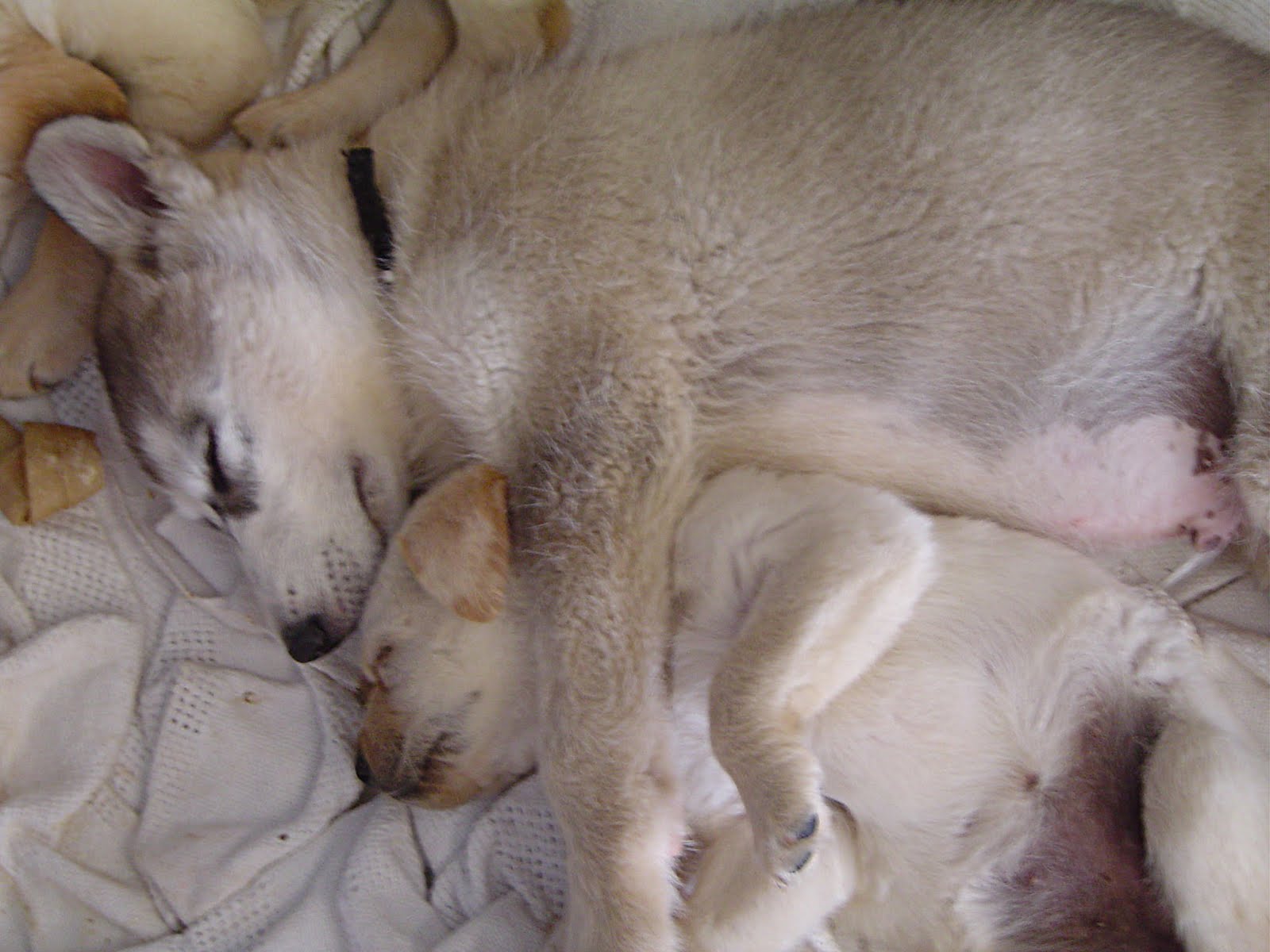
Puppy Love
Take a look at this picture of a 10 week old Husky puppy giving a 6-week old Lab pup a cuddle. So cute, right?
Note To Dogs
(This is a forwarded email from a customer who is also a dog lover. I was amused after reading this so I decided to share it here.)
Dear Dogs and Cats: The dishes with the paw prints are yours and contain your food. The other dishes are mine and contain my food. Placing a paw print in the middle of my plate and food does not stake a claim for it becoming your food and dish, nor do I find that aesthetically pleasing in the slightest.
The stairway was not designed by NASCAR and is not a racetrack. Racing me to the bottom is not the object. Tripping me doesn't help because I fall faster than you can run.
I cannot buy anything bigger than a king sized bed. I am very sorry about this. Do not think I will continue sleeping on the couch to ensure your comfort, however. Dogs and cats can actually curl up in a ball when they sleep. It is not necessary to sleep perpendicular to each other, stretched out to the fullest extent possible. I also know that sticking tails straight out and having tongues hanging out on the other end to maximize space is nothing but sarcasm.
For the last time, there is no secret exit from the bathroom! If, by some miracle, I beat you there and manage to get the door shut, it is not necessary to claw, whine, meow, try to turn the knob or get your paw under the edge in an attempt to open the door. I must exit through the same door I entered. Also, I have been using the bathroom for years - canine/feline attendance is not required.
The proper order for kissing is: Kiss me first, then go smell the other dog or cat's butt. I cannot stress this enough.
Finally, in fairness, dear pets, I have posted the following message on the front door:
TO ALL NON-PET OWNERS WHO VISIT AND LIKE TO COMPLAIN ABOUT OUR PETS:
(1) They live here. You don't.
(2) If you don't want their hair on your clothes, stay off the furniture. That's why they call it 'fur'-niture...
(3) I like my pets a lot better than I like most people.
(4) To you, they are animals. To me, they are adopted sons/daughters who are short, hairy, walk on all fours and don't speak clearly.
Remember, dogs and cats are better than kids because they:
(1) eat less,
(2) don't ask for money all the time,
(3) are easier to train,
(4) normally come when called,
(5) never ask to drive the car,
(6) don't smoke or drink,
(7) don't want to wear your clothes,
(8) don't have to buy the latest fashions,
(9) don't need a gazillion dollars for college and
(10) if they get pregnant, you can sell their children...


Faith Inspires All
With all the chaos, issues and problems many of us are facing right now, sometimes we can't help it but feel desperate and think that there is no way out. But that is not the case with Faith, the dog who walks using the only two legs she has. She teaches us to make use of what we have and be happy with it. She is a proof that there is always hope as long as we are alive...
The Dog Who Loved to Suck on Toads
A dog may be man's best friend. But one dog, Lady, decided she needed more friends -- and she found plenty in the knot of toads living at the local pond. A suburban family's secret struggle with an uncommon addiction comes to light in this personal essay by NPR's Laura Mirsch.
 Lady "was really perky, and happy, and generally excited to see you when you came in the door every day," recalls Andrew Mirsch.
But that was before the Mirsch family moved into a new house.
"We noticed Lady spending an awful lot of time down by the pond in our backyard," Laura Mirsch recalls.
Lady would wander the area, disoriented and withdrawn, soporific and glassy-eyed.
"Then, late one night after I'd put the dogs out, Lady wouldn't come in," Laura Mirsch says. "She finally staggered over to me from the cattails. She looked up at me, leaned her head over and opened her mouth like she was going to throw up, and out plopped this disgusting toad."
It turned out the toads were toxic -- and, if licked, the fluids on their skin provided a hallucinogenic effect.
What followed was the Mirsch family's quest to stop their cocker spaniel from indulging herself. But it wasn't easy. Lady was persistent, and resourceful.
The situation seemed to resolve itself when the toads went into hibernation for the winter.
But when they returned, so did Lady -- and with a vengeance.
"We couldn't keep our dog's addiction a secret any longer," Laura Mirsch says. "The neighbors all knew that Lady was a drug addict, and soon the other dogs weren't allowed to play with her."
In the end, Lady seems to have found a way to manage her problem.
"She seems to have outgrown the wild toad-obsessed years of her youth," Mirsch says, "and now only sucks on weekends."
Source:
npr.org
Lady "was really perky, and happy, and generally excited to see you when you came in the door every day," recalls Andrew Mirsch.But that was before the Mirsch family moved into a new house.
"We noticed Lady spending an awful lot of time down by the pond in our backyard," Laura Mirsch recalls.
Lady would wander the area, disoriented and withdrawn, soporific and glassy-eyed.
"Then, late one night after I'd put the dogs out, Lady wouldn't come in," Laura Mirsch says. "She finally staggered over to me from the cattails. She looked up at me, leaned her head over and opened her mouth like she was going to throw up, and out plopped this disgusting toad."
It turned out the toads were toxic -- and, if licked, the fluids on their skin provided a hallucinogenic effect.
What followed was the Mirsch family's quest to stop their cocker spaniel from indulging herself. But it wasn't easy. Lady was persistent, and resourceful.
The situation seemed to resolve itself when the toads went into hibernation for the winter.
But when they returned, so did Lady -- and with a vengeance.
"We couldn't keep our dog's addiction a secret any longer," Laura Mirsch says. "The neighbors all knew that Lady was a drug addict, and soon the other dogs weren't allowed to play with her."
In the end, Lady seems to have found a way to manage her problem.
"She seems to have outgrown the wild toad-obsessed years of her youth," Mirsch says, "and now only sucks on weekends."
Source:
npr.org
Holiday Safety for Your Dog
 The holidays are all about family, friends, fun and food - but sometimes it's easy to forget about holiday safety for your dog. We all want our dogs to be part of the celebration, but there are some important guidelines to follow. Keep your dog safe this holiday season - no one wants their holiday celebration to end up at the veterinary emergency clinic!
No table scraps! Just because we humans like to indulge in the feast does not mean it is good for our dogs. Rich, fatty foods can seriously upset your dog's stomach and even be toxic. It is especially important to keep your dog away from the following dangerous foods:
- Onions, which can cause anemia (high levels of garlic can, too)
- Grapes and Raisins
- Chocolate
- Bones (especially cooked bones and ANY poultry bones)
- Alcoholic beverages
- Any foods high in fat, sodium and/or sugar
 Watch the holiday decorations! Most dogs are curious by nature, so they will want to check out any additions to the decor. Sniffing can lead to chewing, or even ingestion of foreign objects. Keep electrical cords tucked away and other decorations or holiday plants out of reach. Watch out for dangling objects that can be pulled down and cause injury. Candles should never be left unattended. Also, if you have a Christmas tree, don't let your dog drink the tree water - it can make her sick.
Don't let your dog get lost in the shuffle. Holiday parties and gatherings can mean lots of commotion. This might be fun for you, but not for your dog. Lots of people in your home can result in injury or stress for your dog. A large crowd is not the place for most dogs, so consider keeping her in a crate or quiet room - especially if she is the nervous type. If she is comfortable around a smaller group, just make sure you set down the ground rules with your company: don't feed the dog and keep the doors closed! Many pets get loose and run off during the holiday season. Though your dog should always wear a collar with current identification, this is especially important during the holiday season. Sadly, many dogs run off and become lost during the holiday season. don't let yours be one of them.
You and your dog can still enjoy the holiday season. Be sure to watch for any signs of illness and keep the vet's number handy. Stay safe and have fun. Happy Holidays!
Source:
about.com
If Dogs could Send a Letter to God...
Dear God,
Why do humans smell the flowers, but seldom, if ever, smell one another? Where are their priorities?
Dear God,
When we get to heaven, can we sit on your couch? Or is it the same old story?
Dear God,
Why are there cars named after the jaguar, the cougar, the mustang, the colt, the stingray, and the rabbit, but not ONE named for a dog? How often do you see a cougar riding around? We dogs love a nice ride! Would it be so hard to rename the 'Chrysler Eagle' the 'Chrysler Beagle'?
Dear God,
If a dog barks his head off in the forest and no human hears him, is he still a bad dog?
 Dear God,
If we come back as humans, is that good or bad?
Dear God,
More meatballs, less spaghetti, please.
Dear God,
When we get to the Pearly Gates, do we have to shake hands to get in?
Dear God,
Are there dogs on other planets or are we alone? I have been howling at the moon and stars for a long time, but all I ever hear back is the Schnauzer across the street.
Dear God,
Are there mailmen in Heaven? If there are, will I have to apologize?
Dear God,
We dogs can understand human verbal instructions, hand signals, whistles, horns, clickers, beepers, scent ID's, electromagnetic energy fields, and Frisbee flight paths. What do humans understand?
Dear God,
May I have my testicles back?
Dear God,
These are just some of the things I must remember (in order to keep my present living arrangements):
partipoodle.homestead.com
Why do humans smell the flowers, but seldom, if ever, smell one another? Where are their priorities?
Dear God,
When we get to heaven, can we sit on your couch? Or is it the same old story?
Dear God,
Why are there cars named after the jaguar, the cougar, the mustang, the colt, the stingray, and the rabbit, but not ONE named for a dog? How often do you see a cougar riding around? We dogs love a nice ride! Would it be so hard to rename the 'Chrysler Eagle' the 'Chrysler Beagle'?
Dear God,
If a dog barks his head off in the forest and no human hears him, is he still a bad dog?
 Dear God,
If we come back as humans, is that good or bad?
Dear God,
More meatballs, less spaghetti, please.
Dear God,
When we get to the Pearly Gates, do we have to shake hands to get in?
Dear God,
Are there dogs on other planets or are we alone? I have been howling at the moon and stars for a long time, but all I ever hear back is the Schnauzer across the street.
Dear God,
Are there mailmen in Heaven? If there are, will I have to apologize?
Dear God,
We dogs can understand human verbal instructions, hand signals, whistles, horns, clickers, beepers, scent ID's, electromagnetic energy fields, and Frisbee flight paths. What do humans understand?
Dear God,
May I have my testicles back?
Dear God,
These are just some of the things I must remember (in order to keep my present living arrangements):
- The garbage collector is not stealing our stuff.
- I do not need to suddenly stand straight up when I'm lying under the coffee table.
- I will not roll my toys behind the fridge, behind the sofa or under the bed.
- I must shake the rainwater out of my fur before entering the house.
- I will not eat the cats' food before they eat it or after they throw it up.
- I will stop trying to find the few remaining pieces of clean carpet in the house when I am about to get sick.
- I will not throw up in the car.
- I will not roll on dead seagulls, fish, crabs, etc., just because I like the way they smell.
- I will not munch on "leftovers" in the kitty litter box; although they are tasty, they are not food.
- I will not eat any more Kleenex or napkins and then redeposit them in the backyard after processing.
- The diaper pail is not a cookie jar.
- I will not chew my humans' toothbrushes and not tell them.
- I will not chew crayons or pens, especially not the red ones, or my people will think I am hemorrhaging.
- When in the car, I will not insist on having the window rolled down when it's raining outside.
- We do not have a doorbell. - I will not bark each time I hear one on television.
- I will not steal my Mom's underwear and dance all over the back yard with them.
- The sofa is not a face towel; neither are Mom and Dad's laps.
- My head does not belong in the refrigerator.
- I will not bite the officer's hand when he reaches in for Mom's driver's license and registration.
- I will not play tug-of-war with Dad's underwear when he's on the toilet.
- I will not roll around in the dirt right after getting a bath.
- Sticking my nose into someone's crotch is not an acceptable way of saying 'hello.'
- I will not come in from outside and immediately drag my butt across the carpet.
- The toilet bowl is not a never-ending water supply, and just because the water is blue, doesn't mean it's cleaner.
- I will not sit in the middle of the living room and lick my crotch when company is over.
- I will remember that suddenly turning around and smelling my rear end can quickly clear a room.
- The cat is not a squeaky toy; so when I play with him and he makes that noise, it's usually not a good thing.
partipoodle.homestead.com
Best Dog Breeds For Your Family
If you're thinking about getting a dog, you should bear in mind that some breeds will be better for you than others.
The Early Show's resident veterinarian, Dr. Debbye Turner, offers insight on some of the nation's most popular breeds, to help you determine which might be best for your lifestyle, personality, home and family.
Labrador Retrievers
Labs are a member of the sporting group. They are naturally athletic, high-energy, and intelligent. They are genetically engineered to retrieve: birds, tennis balls, a stick, you name it.
 They require a significant amount of attention. If they are left alone or unattended for extended periods of time, they will most likely develop objectionable, even destructive, behavior, such as incessant barking, digging, and chewing. Labs, like all dogs, are very social. They want to be a part of the family. So leaving a Lab outside all the time is not a good idea. They want to be inside with you.
Labs love to romp, play and roll. You will find that they actively seek out smelly stuff to roll around in.
Although their coat is relatively short, they shed quite a bit. Labs are not for "neat freaks" who don't want a messy, smelly dog. They are also not the best choice for an inactive, frail, or older person who can't provide the necessary activity for a Lab. A Labrador will want to sleep in the bed with you. So this might not be the animal for you, if you wish to keep some distance between you and the dog.
Labs are best suited for a person or family who has plenty of time to spend with them. The owner or owners should be active and willing to provide the dog with plenty of time and space to run and exercise.
Labs can be good family dogs, but might not be the best choice for a family with very young children. Labs' exuberance may cause unintentional harm to a small child. Labs tend not to understand their own strength, and 2-year-olds tend not to enjoy being bowled over by a big dog.
German Shepherds
German Shepherds are herding dogs (as their name implies). Their historic role was that of watchdog and guard dog. They are strong, alert, very intelligent, fearless, and loyal. German Shepherds are great for companionship, for a role as a working dog (guide dog or law enforcement, for instance), or guardian. These are fairly large dogs that require adequate space and exercise.
 This is not the best dog for someone with a shy, hesitant personality. This is not the dog for a home that has limited space or no enclosed yard.
These dogs are great for the person with an active lifestyle. They are great running companions.
They are loyal, protective family dogs that are patient with the pokes and prods of small children, provided the dog is properly trained. Of course, no small child should ever be left unattended with the family pet.
Because German Shepherds have such a strong, resolute personality, you should have an equally assertive approach.
Border Collies
Border Collies are in the herding group of dogs. They have an intense, natural instinct to herd, lead, and control almost anything: sheep, flocks of birds, small children, you name it. Border Collies have an almost endless supply of energy. They demand "work" to do. Because of the characteristics selected over years of breeding, they can be quite independent, which is not always a good thing. And they are master problem-solvers.
 This is not a good breed choice for a family with small children. Most assuredly, the Border Collie will try to "herd" the child or children. This can be disconcerting to the child. As a natural part of a Border Collie's behavior, the dog may nip at your child's heels or rump. Most kids will interpret this as an attack, which wouldn't be good.
Border Collies are for the person who wants to dedicate a lot of their time to his or her dog. The Border Collie owner must be able to provide an extended amount of time outdoors, exercising.
Because Border Collies are so smart, the owner needs to be smart, too. These dogs are great for the intellectual person who enjoys solving problems.
This may be a dog for a small family or single person. They tend to bond with a particular person to the exclusion of everyone else.
Dalmatians
 Dalmatians are a non-sporting breed. They enjoy a lot of attention, and are sensitive to extreme heat and cold. Dalmatians can be "high maintenance." They want to be around people, but don't necessarily want to snuggle. They are not couch potatoes. They can be taught to be good with children, but this requires time and training. Dalmatians have short, beautiful coats, but they shed considerable amounts of hair.
Dalmatians have a genetic predisposition for deafness. It is estimated that 10-to-12 percent of Dalmatians are born with partial or total deafness. Caring for a deaf Dalmatian takes special care and patience. A deaf dog can pose a danger to children. Because they cannot hear you approach them, they can be easily frightened. In most cases, frightened dogs bite. Dalmatians may also tend to strongly protect their territories. So the household that has a lot of people in and out all the time would not be ideal for a Dalmatian.
Bichon Frise
 Bichon Frises are a non-sporting breed. They are very social and affectionate, with lively personalities. They are easy to train. They are not "yappers" like other small breeds. Bichons have a thick coat of curly hair that requires considerable grooming. Bichons tend to be good with children, and love being with the family. Because they are a small dog, good play sessions will provide the exercise that they need.
Bichons are good for people with limited space or small apartments. However, the cost of keeping them adequately groomed can be considerable. They should be professionally groomed at least once a month. And it is advisable to brush them daily to prevent matting. Because Bichons don't shed as much as other breeds, they are good for the person who likes a clean, neat environment.
Chihuahua
Chihuahuas are in the toy group. They are very alert and expressive, and sometimes aggressive. Don't let their size fool you. These dogs have a lot of confidence!
 Of course, Chihuahuas are quite small, with a pretty fragile bone structure. Chihuahuas don't need a lot of outdoor exercising. In fact, a good play session inside should be sufficient for a Chihuahua's needs.
Because they are so small, with a very short coat, they do need to be protected from the cold. A sweater is a big help for a Chihuahua when taken outside. Chihuahuas have a strong will and great sense of loyalty. They are great lap dogs.
Chihuahuas are not ideal for a large family or a family with small children. They don't necessarily like a lot of new people, so they are not great for a very busy household with lots of people coming and going.
Chihuahuas are great for apartment dwellers and single people. They tend to bond strongly with one person in the household. They are great for the person who wants a lap dog and constant companion. But be prepared: Chihuahuas require a long-term commitment. They can live up to 20 years. This is a good dog for the quiet, retiring person who is not necessarily a social butterfly.
These are not the best dogs for a family with small children. Their small frame makes them a candidate for severe injury at the hands of a rambunctious toddler. A Chihuahua will not hesitate to bite if he feels threatened.
Source:
cbsnews.com
The Early Show's resident veterinarian, Dr. Debbye Turner, offers insight on some of the nation's most popular breeds, to help you determine which might be best for your lifestyle, personality, home and family.
Labrador Retrievers
Labs are a member of the sporting group. They are naturally athletic, high-energy, and intelligent. They are genetically engineered to retrieve: birds, tennis balls, a stick, you name it.
 They require a significant amount of attention. If they are left alone or unattended for extended periods of time, they will most likely develop objectionable, even destructive, behavior, such as incessant barking, digging, and chewing. Labs, like all dogs, are very social. They want to be a part of the family. So leaving a Lab outside all the time is not a good idea. They want to be inside with you.
Labs love to romp, play and roll. You will find that they actively seek out smelly stuff to roll around in.
Although their coat is relatively short, they shed quite a bit. Labs are not for "neat freaks" who don't want a messy, smelly dog. They are also not the best choice for an inactive, frail, or older person who can't provide the necessary activity for a Lab. A Labrador will want to sleep in the bed with you. So this might not be the animal for you, if you wish to keep some distance between you and the dog.
Labs are best suited for a person or family who has plenty of time to spend with them. The owner or owners should be active and willing to provide the dog with plenty of time and space to run and exercise.
Labs can be good family dogs, but might not be the best choice for a family with very young children. Labs' exuberance may cause unintentional harm to a small child. Labs tend not to understand their own strength, and 2-year-olds tend not to enjoy being bowled over by a big dog.
German Shepherds
German Shepherds are herding dogs (as their name implies). Their historic role was that of watchdog and guard dog. They are strong, alert, very intelligent, fearless, and loyal. German Shepherds are great for companionship, for a role as a working dog (guide dog or law enforcement, for instance), or guardian. These are fairly large dogs that require adequate space and exercise.
 This is not the best dog for someone with a shy, hesitant personality. This is not the dog for a home that has limited space or no enclosed yard.
These dogs are great for the person with an active lifestyle. They are great running companions.
They are loyal, protective family dogs that are patient with the pokes and prods of small children, provided the dog is properly trained. Of course, no small child should ever be left unattended with the family pet.
Because German Shepherds have such a strong, resolute personality, you should have an equally assertive approach.
Border Collies
Border Collies are in the herding group of dogs. They have an intense, natural instinct to herd, lead, and control almost anything: sheep, flocks of birds, small children, you name it. Border Collies have an almost endless supply of energy. They demand "work" to do. Because of the characteristics selected over years of breeding, they can be quite independent, which is not always a good thing. And they are master problem-solvers.
 This is not a good breed choice for a family with small children. Most assuredly, the Border Collie will try to "herd" the child or children. This can be disconcerting to the child. As a natural part of a Border Collie's behavior, the dog may nip at your child's heels or rump. Most kids will interpret this as an attack, which wouldn't be good.
Border Collies are for the person who wants to dedicate a lot of their time to his or her dog. The Border Collie owner must be able to provide an extended amount of time outdoors, exercising.
Because Border Collies are so smart, the owner needs to be smart, too. These dogs are great for the intellectual person who enjoys solving problems.
This may be a dog for a small family or single person. They tend to bond with a particular person to the exclusion of everyone else.
Dalmatians
 Dalmatians are a non-sporting breed. They enjoy a lot of attention, and are sensitive to extreme heat and cold. Dalmatians can be "high maintenance." They want to be around people, but don't necessarily want to snuggle. They are not couch potatoes. They can be taught to be good with children, but this requires time and training. Dalmatians have short, beautiful coats, but they shed considerable amounts of hair.
Dalmatians have a genetic predisposition for deafness. It is estimated that 10-to-12 percent of Dalmatians are born with partial or total deafness. Caring for a deaf Dalmatian takes special care and patience. A deaf dog can pose a danger to children. Because they cannot hear you approach them, they can be easily frightened. In most cases, frightened dogs bite. Dalmatians may also tend to strongly protect their territories. So the household that has a lot of people in and out all the time would not be ideal for a Dalmatian.
Bichon Frise
 Bichon Frises are a non-sporting breed. They are very social and affectionate, with lively personalities. They are easy to train. They are not "yappers" like other small breeds. Bichons have a thick coat of curly hair that requires considerable grooming. Bichons tend to be good with children, and love being with the family. Because they are a small dog, good play sessions will provide the exercise that they need.
Bichons are good for people with limited space or small apartments. However, the cost of keeping them adequately groomed can be considerable. They should be professionally groomed at least once a month. And it is advisable to brush them daily to prevent matting. Because Bichons don't shed as much as other breeds, they are good for the person who likes a clean, neat environment.
Chihuahua
Chihuahuas are in the toy group. They are very alert and expressive, and sometimes aggressive. Don't let their size fool you. These dogs have a lot of confidence!
 Of course, Chihuahuas are quite small, with a pretty fragile bone structure. Chihuahuas don't need a lot of outdoor exercising. In fact, a good play session inside should be sufficient for a Chihuahua's needs.
Because they are so small, with a very short coat, they do need to be protected from the cold. A sweater is a big help for a Chihuahua when taken outside. Chihuahuas have a strong will and great sense of loyalty. They are great lap dogs.
Chihuahuas are not ideal for a large family or a family with small children. They don't necessarily like a lot of new people, so they are not great for a very busy household with lots of people coming and going.
Chihuahuas are great for apartment dwellers and single people. They tend to bond strongly with one person in the household. They are great for the person who wants a lap dog and constant companion. But be prepared: Chihuahuas require a long-term commitment. They can live up to 20 years. This is a good dog for the quiet, retiring person who is not necessarily a social butterfly.
These are not the best dogs for a family with small children. Their small frame makes them a candidate for severe injury at the hands of a rambunctious toddler. A Chihuahua will not hesitate to bite if he feels threatened.
Source:
cbsnews.com
Rainbow Bridge Poem
Just this side of heaven is a place called Rainbow Bridge.
When an animal dies that has been especially close to someone here, that pet goes to Rainbow Bridge. There are meadows and hills for all of our special friends so they can run and play together. There is plenty of food, water and sunshine, and our friends are warm and comfortable.
 All the animals who had been ill and old are restored to health and vigor. Those who were hurt or maimed are made whole and strong again, just as we remember them in our dreams of days and times gone by. The animals are happy and content, except for one small thing; they each miss someone very special to them, who had to be left behind.
They all run and play together, but the day comes when one suddenly stops and looks into the distance. His bright eyes are intent. His eager body quivers. Suddenly he begins to run from the group, flying over the green grass, his legs carrying him faster and faster.
You have been spotted, and when you and your special friend finally meet, you cling together in joyous reunion, never to be parted again. The happy kisses rain upon your face; your hands again caress the beloved head, and you look once more into the trusting eyes of your pet, so long gone from your life but never absent from your heart.
Then you cross Rainbow Bridge together....
Author unknown...
Source: http://rainbowsbridge.com
When an animal dies that has been especially close to someone here, that pet goes to Rainbow Bridge. There are meadows and hills for all of our special friends so they can run and play together. There is plenty of food, water and sunshine, and our friends are warm and comfortable.
 All the animals who had been ill and old are restored to health and vigor. Those who were hurt or maimed are made whole and strong again, just as we remember them in our dreams of days and times gone by. The animals are happy and content, except for one small thing; they each miss someone very special to them, who had to be left behind.
They all run and play together, but the day comes when one suddenly stops and looks into the distance. His bright eyes are intent. His eager body quivers. Suddenly he begins to run from the group, flying over the green grass, his legs carrying him faster and faster.
You have been spotted, and when you and your special friend finally meet, you cling together in joyous reunion, never to be parted again. The happy kisses rain upon your face; your hands again caress the beloved head, and you look once more into the trusting eyes of your pet, so long gone from your life but never absent from your heart.
Then you cross Rainbow Bridge together....
Author unknown...
Source: http://rainbowsbridge.com
Subscribe to:
Posts (Atom)
Blogger templates


